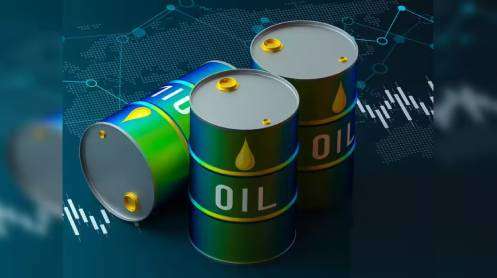
Global oil prices surged sharply on Friday, with West Texas Intermediate crude (WTI) jumping more than 10 percent to trade near $90 per barrel for the first time since April 2024, as escalating tensions in the Middle East disrupted energy shipments through the critical Strait of Hormuz.
At around 10:37 a.m. CST (1637 GMT), Brent crude futures were up $5.42, or 6.35 percent, to $90.83 per barrel, while WTI gained $7.81, or 9.81 percent, reaching $88.96 per barrel. It marked the second consecutive day that gains in US crude futures outpaced those in Brent, narrowing the price spread between the two benchmarks.
Analysts said traders and refiners are increasingly turning to US crude supplies as Middle Eastern exports face disruptions. “Refiners and trading houses are searching for alternative barrels, and the US is the largest producer,” said Giovanni Staunovo, adding that the price spread is adjusting to reflect transportation costs and strong demand for American crude.
Oil prices are also on track for their largest weekly increase since the extreme volatility of the COVID-19 pandemic in 2020, as the widening conflict in the region threatens a major share of global energy supplies.
The surge began after the United States and Israel launched strikes on Iran last week, prompting Tehran to halt tanker traffic through the Strait of Hormuz. The narrow waterway typically carries about 20 percent of global oil supplies each day.
With the passage effectively closed for nearly a week, roughly 140 million barrels of oil — equivalent to about 1.4 days of global demand — have been unable to reach international markets.
The conflict has also spread across several energy-producing regions of the Middle East, disrupting production and forcing shutdowns of refineries and liquefied natural gas facilities.
Market experts warn that prices could rise further if the disruption continues. “The worst-case scenario is developing before our eyes,” said John Kilduff, adding that forecasts of oil reaching $100 per barrel are increasingly likely to materialise.
Earlier, Qatar’s energy minister Saad Sherida Al-Kaabi warned in an interview with the Financial Times that Gulf energy exporters may be forced to suspend shipments if the conflict persists, potentially driving oil prices as high as $150 per barrel.
Meanwhile, Donald Trump told Reuters that he was not concerned about rising gasoline prices in the United States, saying that if fuel prices increase, “they rise,” while emphasising that the ongoing military operation remains his administration’s priority.
A White House official said the United States Department of the Treasury is considering measures to mitigate rising energy costs linked to the conflict, although reports suggest the administration has ruled out trading oil futures for now.
In a separate move aimed at easing supply constraints, Washington has granted waivers allowing companies to purchase sanctioned Russia oil stored on tankers. The first waivers were issued to refiners in India, which have since purchased millions of barrels of Russian crude, reversing months of pressure to halt such imports.
According to ship-tracking firm Kpler, roughly 30 million barrels of Russian crude are currently available on vessels operating in the Indian Ocean, Arabian Sea, and Singapore Strait, including volumes held in floating storage, which could help ease supply shortages if brought to market quickly.
By Reuters